
Blog Details
Why Healthcare Providers Are Turning to Agentic AI for Patient Experience and Operational Efficiency

Share This Article:
Healthcare Expectations Are Rapidly Changing
Healthcare organizations are facing increasing pressure to improve patient communication while managing staffing shortages, administrative overload, and rising patient expectations.
According to recent McKinsey healthcare consumer insights,
Patients increasingly expect seamless digital engagement, personalized communication, and easier access to healthcare services.
The Administrative Pressure Facing Healthcare Providers
Reception teams inside hospitals, clinics, and healthcare facilities are now managing patient inquiries, insurance clarification, follow ups, visitor assistance, appointment changes, and after hours communication.
At the same time, the World Health Organization continues highlighting healthcare workforce shortages affecting healthcare systems globally.
This growing operational pressure is pushing healthcare organizations to explore more intelligent patient engagement systems.
Why Traditional Patient Support Systems Are No Longer Enough
Many healthcare organizations introduced basic chatbots and automated phone systems over the past few years. However, patients increasingly expect more natural and personalized interactions.
Healthcare AI is now evolving from simple automation into conversational and Agentic AI systems capable of supporting patients more dynamically.
According to Deloitte healthcare AI insights, AI adoption is rapidly expanding into healthcare operations, patient communication, and engagement workflows.
The Rise of AI Receptionists in Healthcare
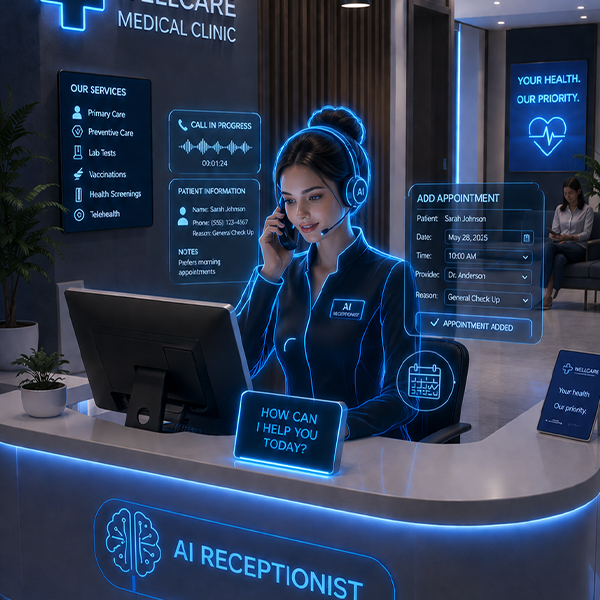
Modern AI reception systems are designed to provide more accessible and responsive patient support experiences.
- Conversational AI receptionists can assist with
- Appointment scheduling
- Answer patient FAQs
- Support multilingual communication
- Guide visitors inside facilities
- Provide real time assistance.
Solutions such as the Verofax AI Receptionist Agent are helping healthcare organizations modernize patient facing engagement across digital and physical environments
Ready to Elevate Customer Experiences?
Communication Accessibility Is Becoming Critical
Communication quality directly impacts patient trust and healthcare experiences.
The Joint Commission continues emphasizing the importance of effective communication in improving patient safety and patient engagement.
AI powered multilingual engagement systems are increasingly being explored to improve accessibility while reducing operational pressure on healthcare staff.
The Future of Patient Engagement
The future healthcare experience will likely become increasingly conversational, intelligent, and connected.
Healthcare organizations are exploring conversational AI support, intelligent patient engagement, real time communication workflows, and multilingual patient assistance.
The objective is not replacing healthcare professionals. It is helping healthcare organizations improve responsiveness while allowing care teams to focus more on patient
